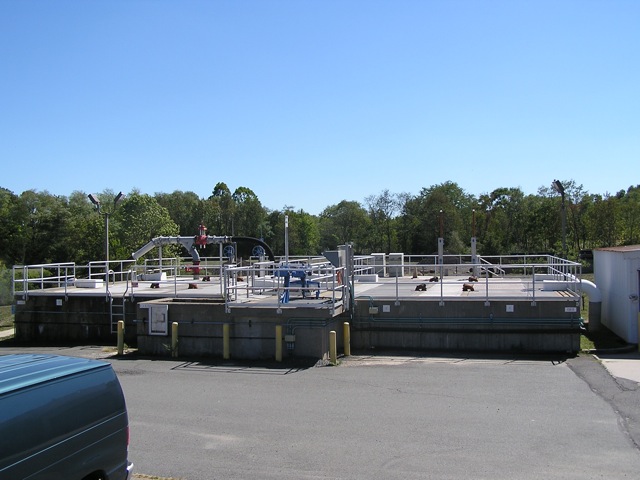
The raw wastewater enters four (4) Aerated Grit Chambers. Grit, sand, gravel, and heavy inorganic material settle out in this process. Air is introduced at the bottom of each grit chamber which helps keep the lighter organic material in suspension and freshen the incoming wastewater. The raw wastewater then flows by gravity from the grit chambers to the first biological process known as the Modified Aeration System.
Odor Control: Anaerobic bacteria in the collection system produces hydrogen sulfide (H2S) gas (characteristic foul odor of rotten eggs) while the raw wastewater travels to the treatment plant. Warm water with a pH of 4 is pumped from the incinerator scrubbers to the grit chambers which drives much of the dissolved H2S out of solution. The grit chambers are covered to contain the H2S gas. The headspace (area between the water surface and the cover) is drawn off and is introduced below the water surface (via a positive displacement blower) of the Modified Aeration (MA) Tanks through course bubble diffusers in the first step of odor control.